Sleep Well CBT-I Course
✦ Module 1 of 6 — Free for All Members
Why You Can't Sleep —
and Why It's Not Your Fault
Before we can fix sleep, we must first understand it. Most people with insomnia are not broken — they're caught in a biological trap. This module explains the trap, and why knowing about it is the first step to escaping it.
The Two Systems That Govern Sleep
Your body runs two parallel systems that work together to produce sleep. Understanding both changes everything.
System 1 — Sleep Drive (Process S): Every waking hour, a chemical called adenosine builds up in your brain. The longer you've been awake, the greater the pressure to sleep. This is why you feel naturally tired in the evening. When you sleep, adenosine is cleared — and your drive resets. Think of it like a battery that discharges all day and recharges overnight.
System 2 — The Circadian Clock (Process C): Your body has an internal 24-hour clock, regulated by light and temperature. It tells your brain when to release melatonin (the darkness hormone), when to drop your core body temperature, and when to open the metaphorical "sleep gate." Go against this clock — by going to bed too early, or staying in bed too late — and sleep becomes elusive regardless of how tired you feel.
Key Insight
Insomnia is not a problem of not being able to sleep. It is a problem of the arousal system overriding the sleep system — and CBT-I works by gradually dismantling that arousal.
Why Lying in Bed Awake Makes Things Worse
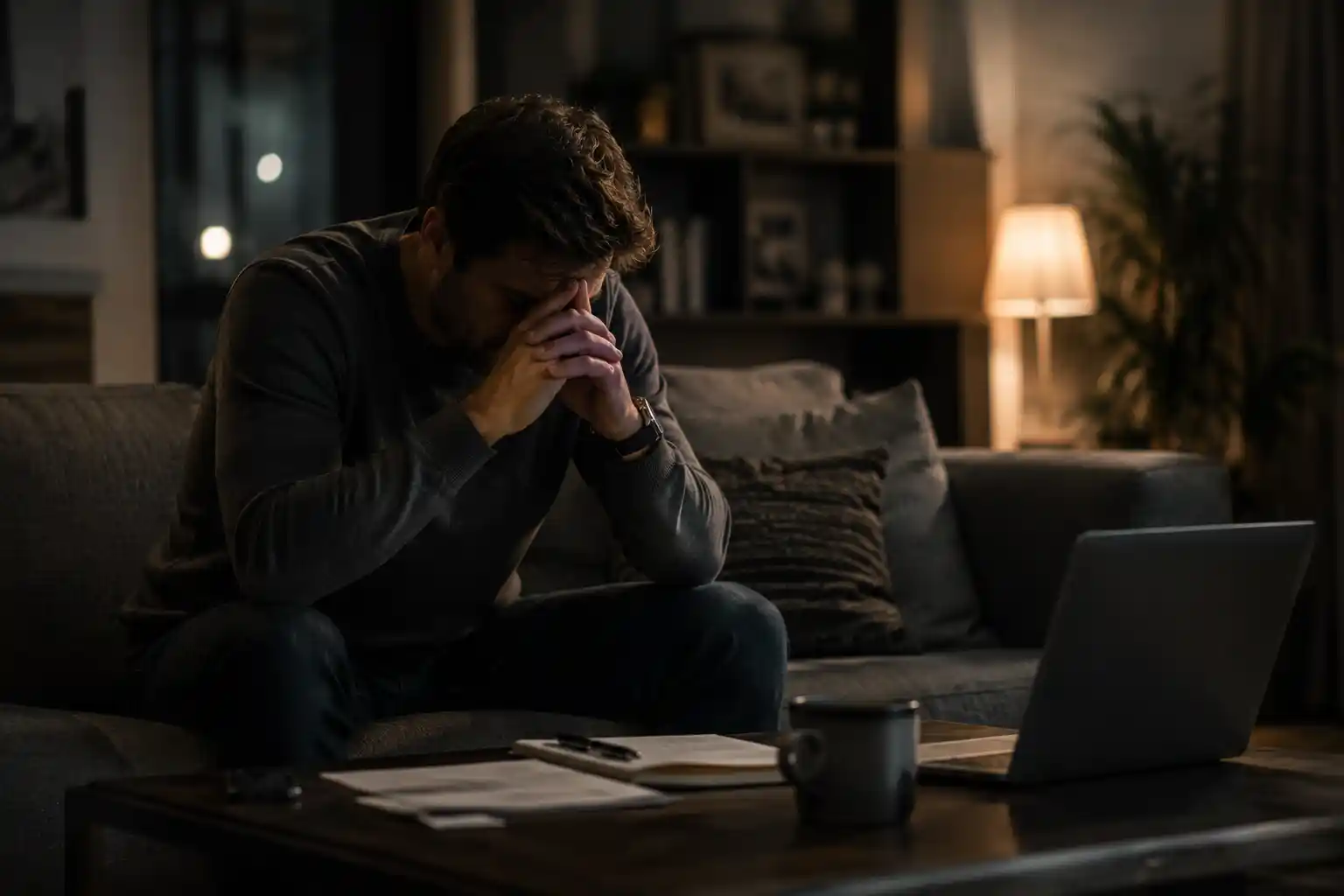
Here is perhaps the most counterintuitive truth about insomnia: the more you try to sleep, the less you sleep. And the more time you spend in bed awake, the more your brain begins to associate the bed itself with wakefulness, frustration, and anxiety.
This is called conditioned arousal — and it's at the heart of chronic insomnia. Your bedroom, your pillow, even the routine of getting into bed can become triggers for alertness rather than sleep. CBT-I directly targets and reverses this pattern.
Your Reflection Exercise
Before moving to Module 2, take five minutes to answer these questions honestly. You don't need to share them with anyone — this is for you.
- What time do you typically get into bed, and what time do you actually fall asleep? How large is that gap?
- When you're lying awake, what thoughts tend to dominate? Are they about sleep itself, or other concerns?
- Does your bedroom feel like a place of rest — or has it started to feel like a place of dread?
- On your best sleep nights, what was different? What conditions were present that aren't always there?